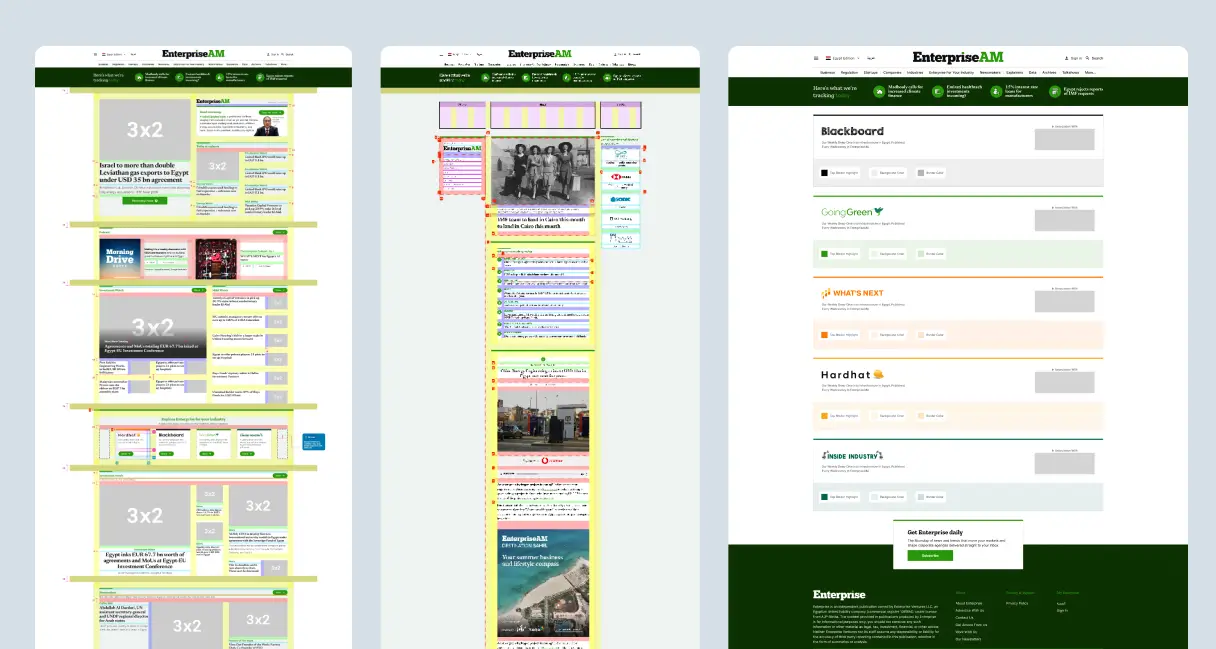
Building a Newsroom-Scale Design System for Enterprise
How we turned daily publishing chaos into a scalable design system that supports multiple brands, sponsors, and a fast-moving engineering team.

Design systems rarely start as grand initiatives. More often, they grow out of small, persistent pain: resizing sponsor logos for the third time in a morning, guessing which story card variant is “current,” or fielding another Slack message from a developer asking whether a margin is 24px or 28px. At Enterprise, these frictions were colliding with a product that ships every single day. Inconsistency wasn't just cosmetic—it was expensive.
As Head of UI/UX, I led a team of four designers responsible for the look and feel of the entire editorial ecosystem: the main EnterpriseAM product, its sub-brands, sponsorship units, and the various experiences around them. Very quickly it became clear that if we wanted to scale without burning out, we needed more than good intentions. We needed a design system that matched the speed and complexity of a modern newsroom.
Leading a Small Team and Organizing the Chaos
Before we drew our first “official” component, we fixed something more fundamental: how we worked inside I managed a team of four designers, and each of them was moving fast, producing layouts for daily editions, special issues, and sponsored assets. But without a shared structure, we were losing time to file hunting, version confusion, and repeated decisions.
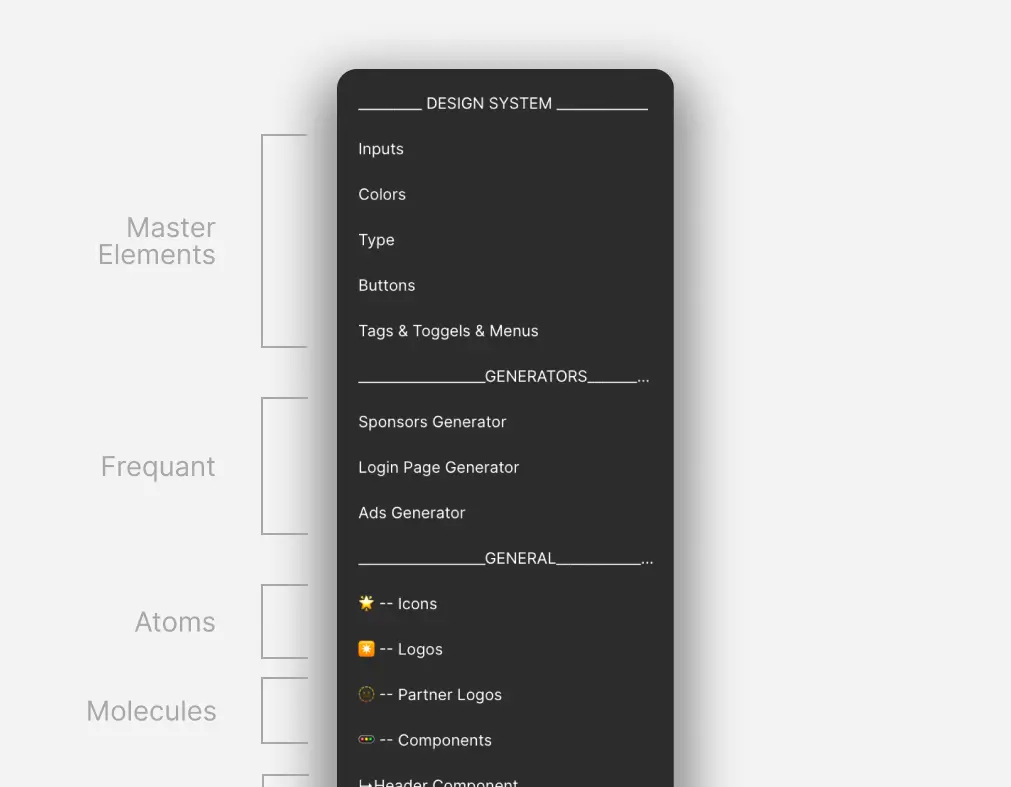
We standardised file structures, page naming, component groups, and the way we used auto-layout and variants. Once that foundation was in place, design reviews became shorter and more focused; new designers could onboard in hours instead of days; and we spent less time debating where things belonged and more time designing. As the structure matured, design review cycles dropped by nearly 40% because everyone was finally referencing the same source of truth.
Sponsor Logos, Artwork, and the Sponsor Module
Sponsors are a core part of Enterprise's business, and they came with a lot of complexity: different logo shapes, artwork treatments, and visibility rules across the website, daily emails, and promotional units. Before the system, each integration felt custom. Designers were resizing logos manually, re-exporting assets, and re-aligning layouts for each new sponsor.
To solve this, we created a sponsor module system inside Figma. It was built as a flexible master component with responsive slots for logos and artwork. When a new sponsor came in, we dropped their logo and visuals into that framework. From there, the update flowed automatically to every place that sponsor appeared, and Zeplin synced all the assets and specs developers needed. The impact was immediate: QA notes related to sponsor styling dropped by over 60%, and design time preparing sponsor assets shrank by around 70% because changes happened in one place instead of five.
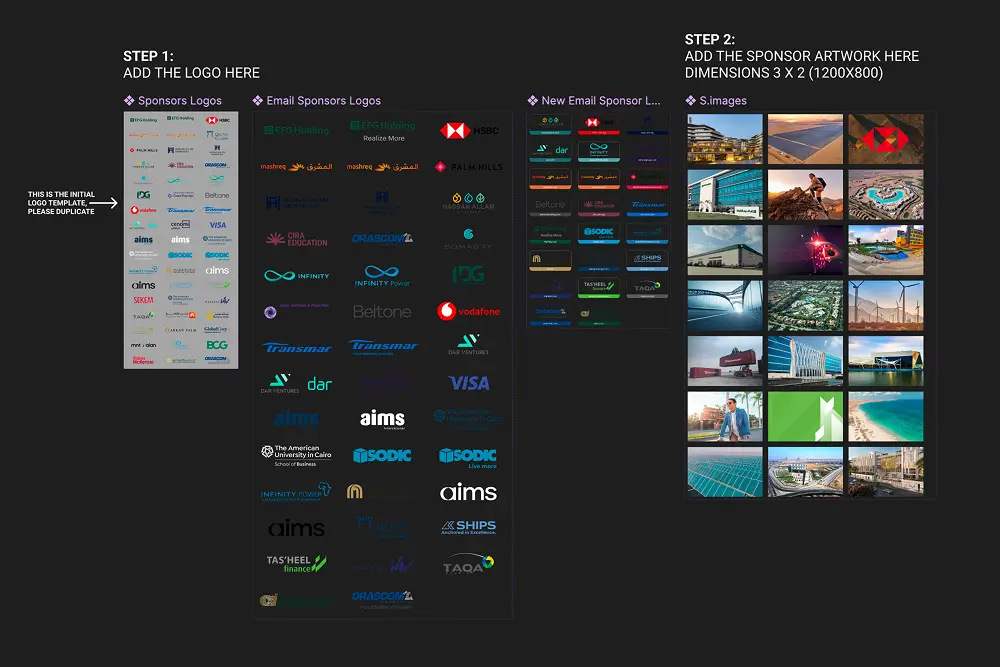
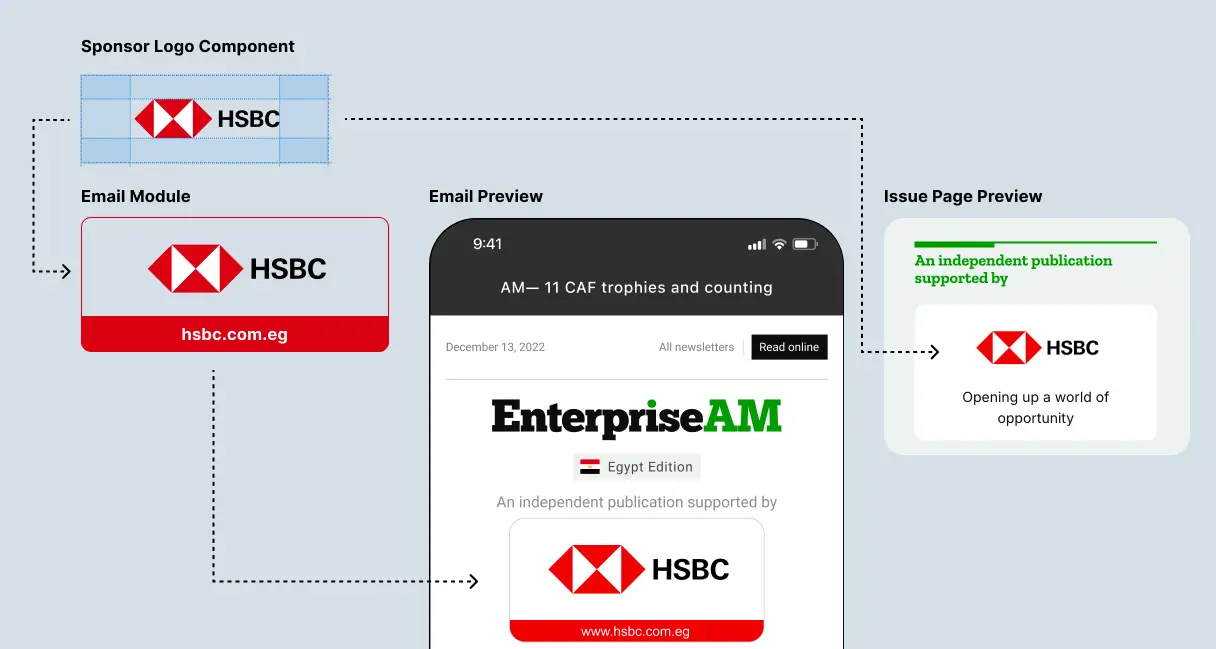
One component to override and generate all required logos with the proper spacing / alignment, and artwork treatments for every use case.
Growing a Multi-Brand Ecosystem Without Fragmenting the Product
EnterpriseAM was the flagship, but the brand quickly expanded into a family: EnterpriseAM Weekend, EnterprisePM, Logistics, Climate, and Corridors (India ↔ MENA). Each needed a distinct personality, yet all of them had to feel unmistakably “Enterprise.” Without a system, this kind of growth almost always leads to visual drift.
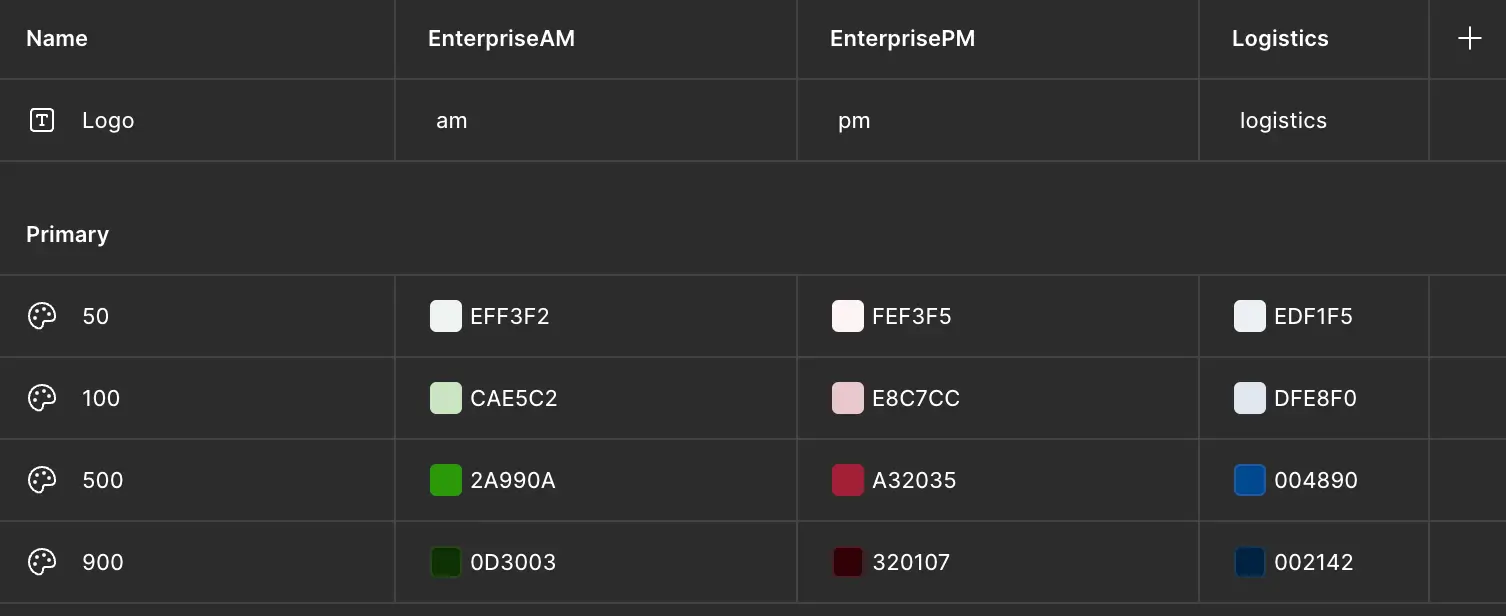
Figma Variables in Action, setting proper color variables, for each publication
We approached this by building a multi-brand design system on top of shared foundations. Every publication inherited the same spacing rhythm, typography system, grid, and editorial structure. The uniqueness came from carefully defined color palettes—using consistent shade scales like 50, 100, 500, and 900—and logo variations designed under a common set of brand rules. This structure allowed us to give each publication its own character while still belonging to a coherent ecosystem. As a side effect, brand-related QA errors dropped by roughly 45%, because the visual language was no longer improvised; it was encoded into the system.
The Result: Gentlemen Agreement between Design and Development teams.
A newsroom doesn't pause to let the design team catch up. The system we built had to work in real production conditions. We turned recurring patterns into templates.
By the time the design system matured, the change was visible everywhere. Designers moved faster, developers had clear mappings, consistent tokens, and fewer reasons to question intent. Adding a new sponsor, became a 5 minutes job, instead of 3 hours of ping-pong for quality or sizeing issues.